

Uncertainty in Europe is increasing, driven in large part by Russia’s revisionism and the existential threat it poses – above all to Ukraine. At the same time, Russia is waging a hybrid war against the rest of Europe in an attempt to reshape the European security order in line with the Kremlin’s vision. The Trump administration has only added to this uncertainty, calling the transatlantic partnership into question through both its rhetoric and its actions.
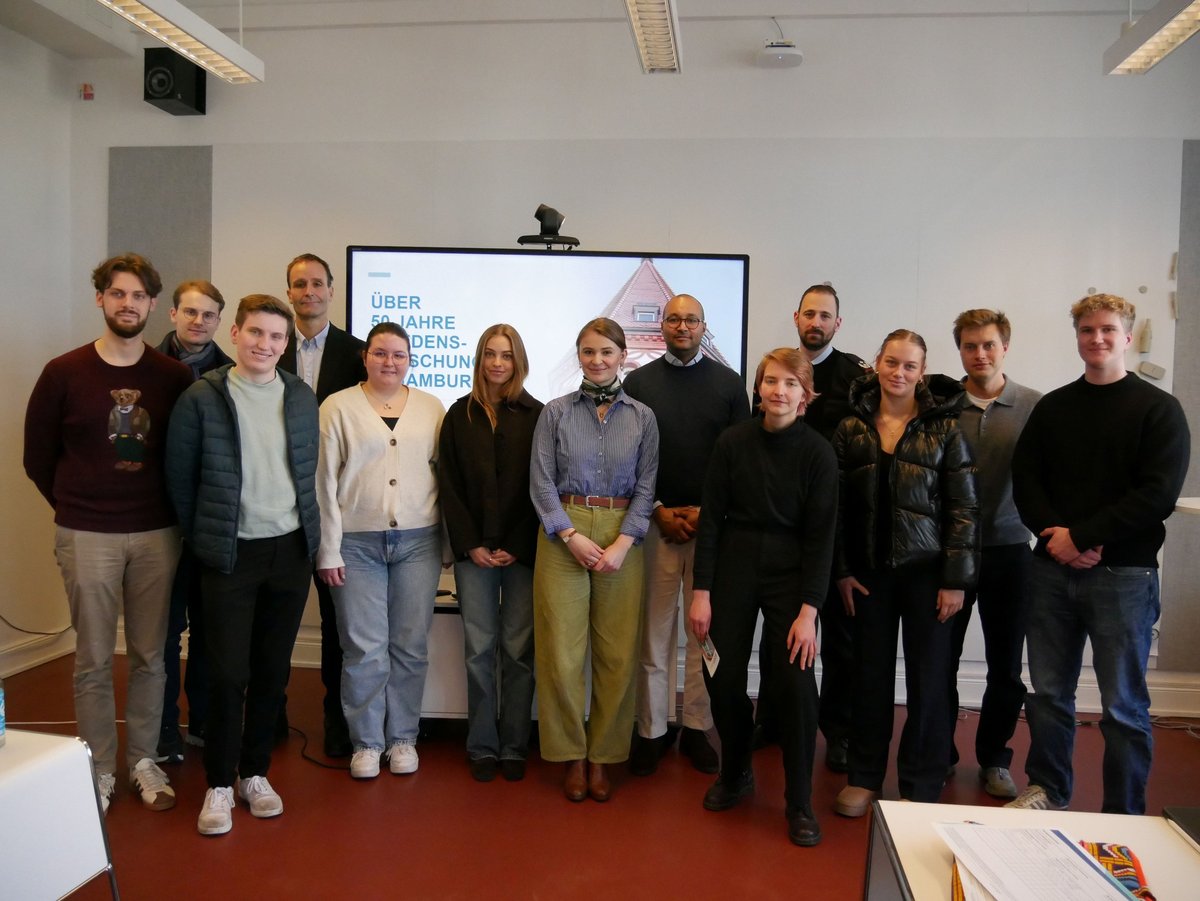
On February 25, the Hamburg student group of the Konrad Adenauer Foundation visited the IFSH to discuss the future of European security. Dr. habil. Cornelius Friesendorf, Head of the Centre for OSCE Research at the IFSH, outlined several reasons why, despite the acute threat posed by Russia and the great power politics of the United States, European states have made little progress in coordinating their defence efforts. Lieutenant Colonel (GS) Thilo Geiger, Research Fellow at the IFSH, provided an overview of the military situation in Ukraine and the gaps in European defence.
A key question in the discussion with students was how policymakers can strengthen Europe’s capacity to defend itself. Central to this is a broader political and societal dialogue about why European defence is necessary. Commitments to the Europeanization of the defence industry must also be put into practice. Only in this way can Europe escape the present situation, where vast sums are spent on armaments while differing national standards and similar obstacles limit the resulting military capability.