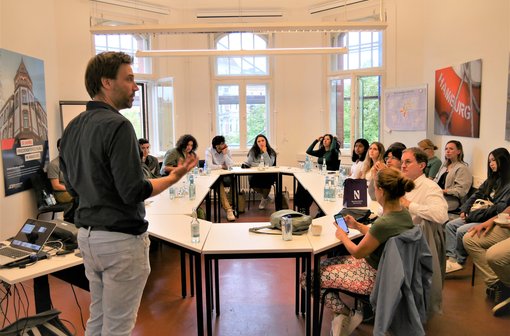


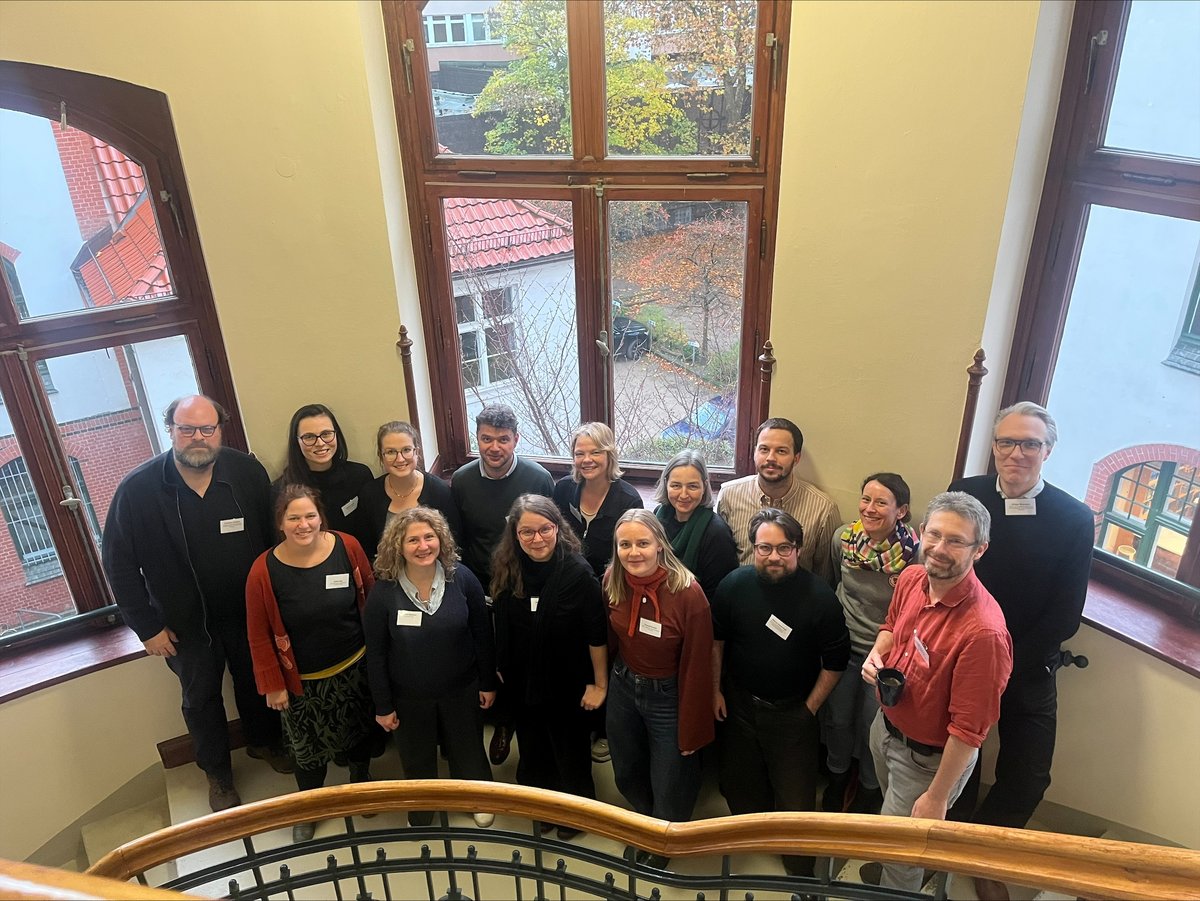
How can participatory research contribute to the study of complex crises and societal transformations? And how can participatory and co-creative research approaches be designed and implemented responsibly in the face of increasing political polarization, limited resources, and growing scepticism towards science? These questions were at the heart of an interdisciplinary workshop held on 12–13 November 2026 at the Institute for Peace Research and Security Policy at the University of Hamburg (IFSH).
Organized by Philipp Schulz and Holger Niemann (IFSH), the workshop brought together 16 researchers from different disciplines and research institutions, including peace and conflict studies, social-ecological research, history, and migration studies. The workshop focused on exchanging experiences and exploring the potential for knowledge production, as well as the challenges of participatory research approaches in the context of societal crises and transformations.
The workshop was grounded in the understanding that participatory research actively involves different societal actors in research processes and enables the co-production of knowledge. Particularly in complex and conflict-affected contexts, such approaches can bring to light perspectives and experiences that might otherwise remain difficult to access through other research methods. At the same time, participatory research faces specific methodological, practical, and ethical challenges, particularly concerning power relations, access and inclusion, responsibilities, and time constraints.
To foster collective and constructive exchange, the workshop emphasized open discussions and interactive formats. Participants jointly reflected on the contributions of participatory research to scientific knowledge production, discussed concrete challenges and limitations encountered in their own research practices, and explored ways of conducting participatory research responsibly under challenging conditions.
Beyond these substantive discussions, the workshop also provided an opportunity to explore possibilities for longer-term interdisciplinary networking and collaboration, with the aim of continuing the exchange on participatory research approaches and the challenges they face.