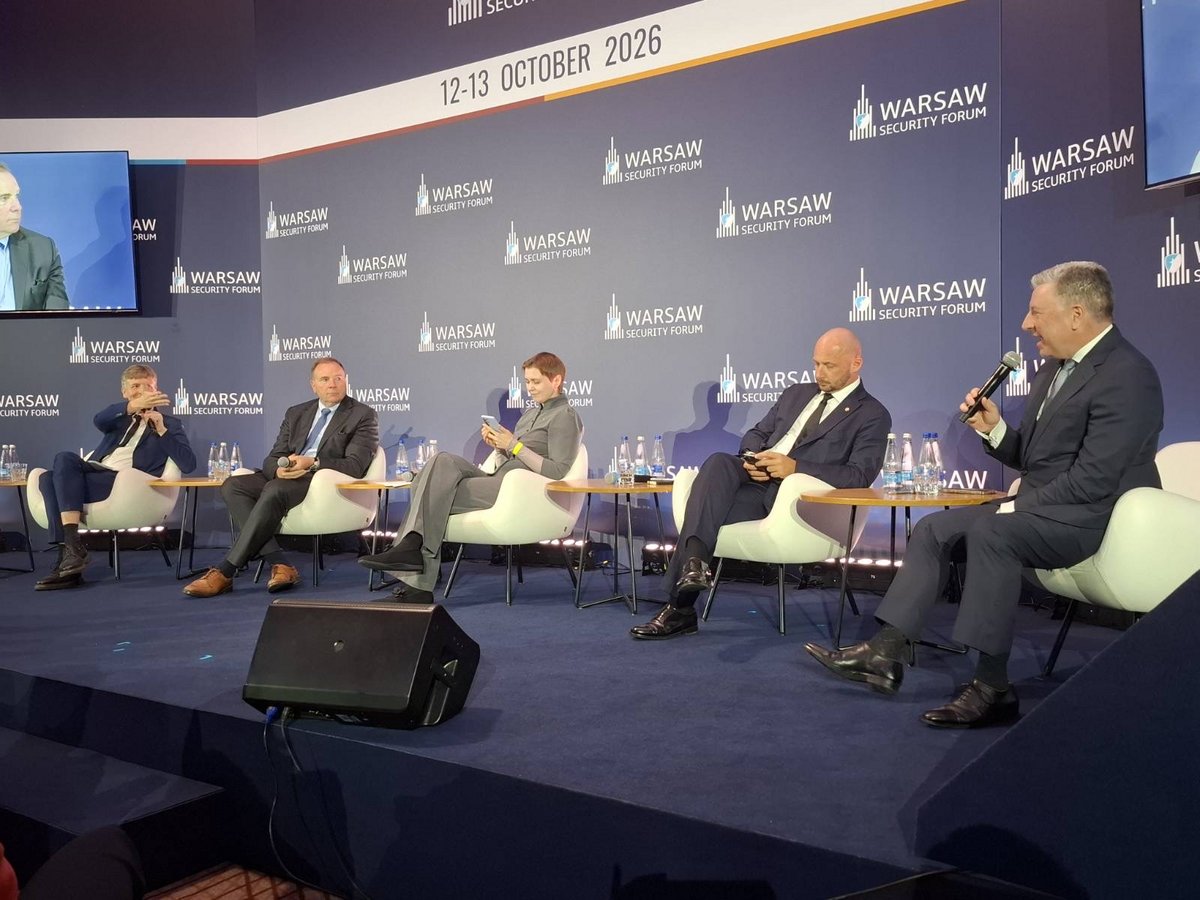
How should Russia’s nuclear signalling over Kaliningrad be read, and what does it mean for security in the Baltic Sea region? A high-level panel at the Warsaw Security Forum addressed these questions on 13 October 2026. It was moderated by Dr Tobias Fella, Senior Researcher at the IFSH Berlin Office.
Kaliningrad is among the most complex security challenges in the Baltic Sea region. Surrounded by NATO and EU territory, the heavily militarised exclave is increasingly isolated economically and politically, yet remains of considerable strategic importance to Moscow. Restricted access and limited international oversight make developments there difficult to assess. Recent warnings from Moscow have brought the exclave further into focus.
The panel “Kaliningrad’s Future: Nuclear Signalling and the Baltic Security Order” focused on Russia’s nuclear signalling and its emerging military posture in the exclave. It also addressed what a future security order in the Baltic Sea region could look like and what role risk reduction and arms control can play.
The panellists were:
- Ben Hodges, Commander of US Army Europe from 2014 to 2017
- Dovilė Šakalienė, Member of the Lithuanian Seimas and Lithuania’s Minister of National Defence from 2024 to 2025
- Jacek Siewiera, Head of Poland’s National Security Bureau from 2022 to 2025
- Kurt Volker, US Ambassador to NATO from 2008 to 2009 and US Special Representative for Ukraine Negotiations from 2017 to 2019
The Warsaw Security Forum is one of the leading international conferences on European and transatlantic security.
Watch the full discussion on YouTube: https://youtube.com/live/gjZGQtv-PiY