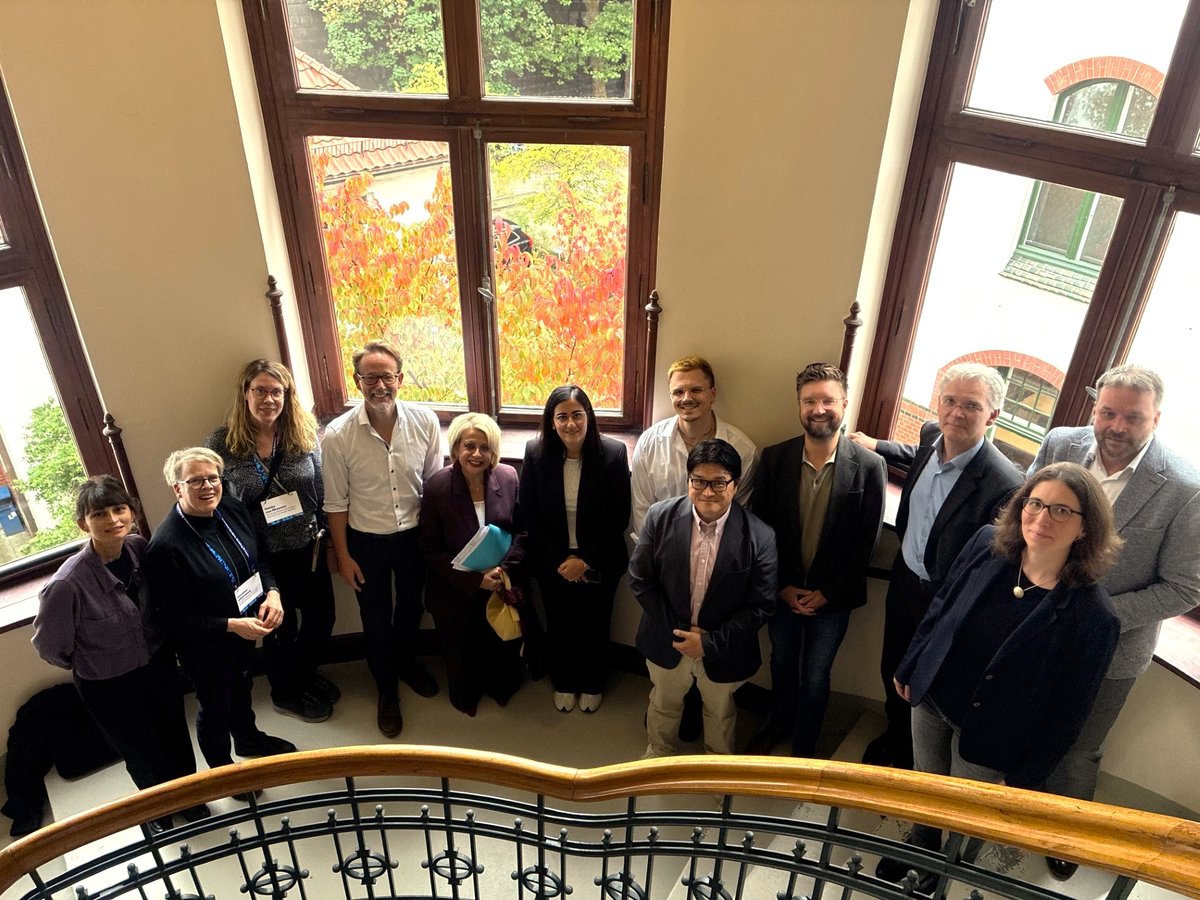
Dr Joanna Drake (fifth from the left) and Senator for Science Maryam Blumenthal (right next to her) visited the IFSH in Hamburg in mid-September to learn about the latest findings and trends in security and climate research. (c) IFSH

What’s new in Security and Climate Research?

On the sidelines of this year’s Hamburg Science Summit, Dr Joanna Drake, Deputy Director-General for Research and Innovation at the European Commission, visited the IFSH on 17 September together with Hamburg’s Senator for Science, Maryam Blumenthal. On behalf of IFSH Director Prof. Dr Ursula Schröder, Carsten Wode, Commercial Director, and Jörn Weinhold, Head of Research Services, welcomed the two guests and the accompanying EU team of Hamburg’s Ministry of Science, Research and Equality. 

Dr Ulrich Kühn, Head of the Research Area Arms Control and Emerging Technologies and Head of IFSH’s Knowledge Transfer, presented the institute’s research and knowledge transfer activities. In his presentation, he focused on topics such as the resilience of democracies and societies (keyword: democratic shield), as well as China’s rise and possible future scenarios involving AI.
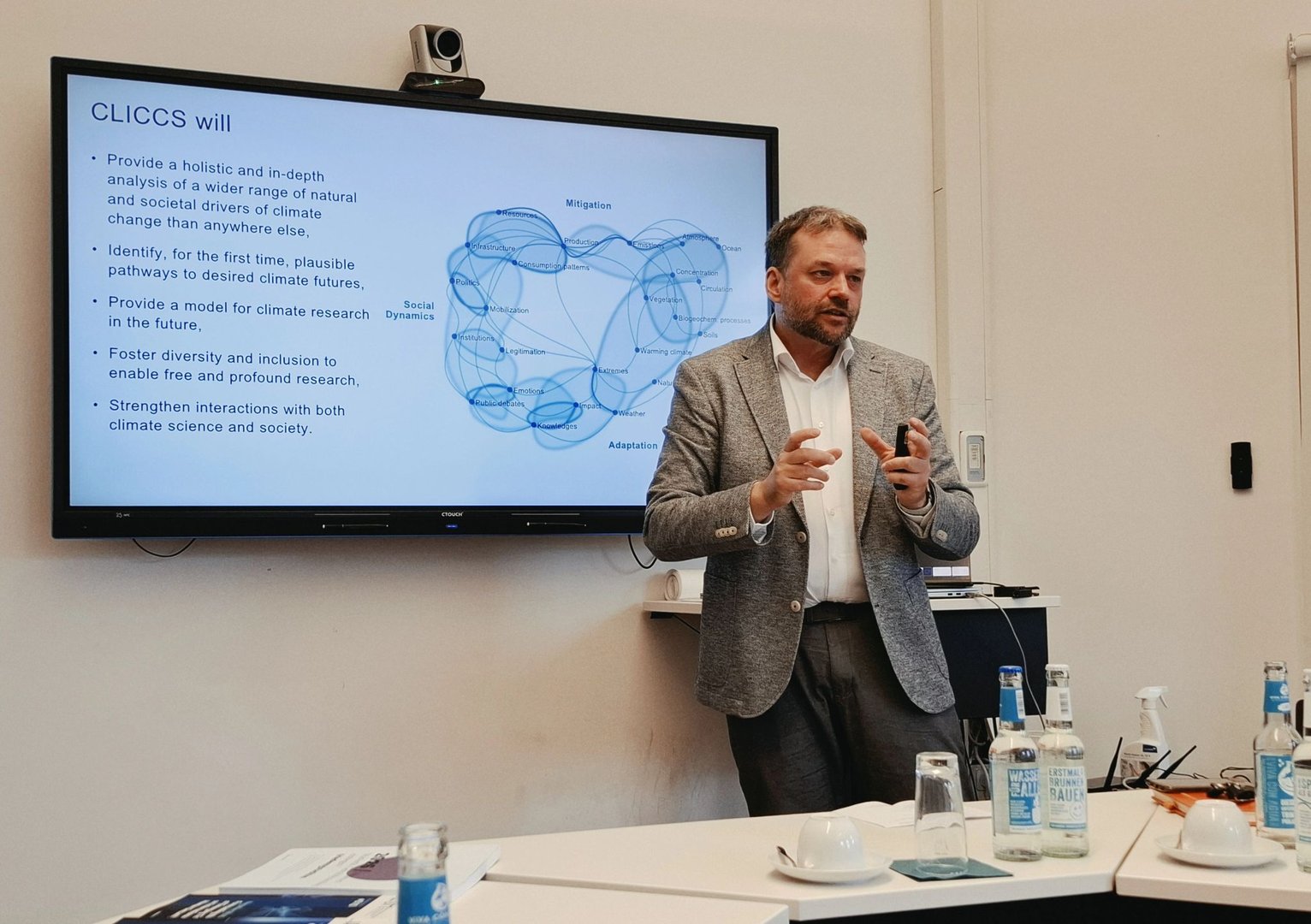
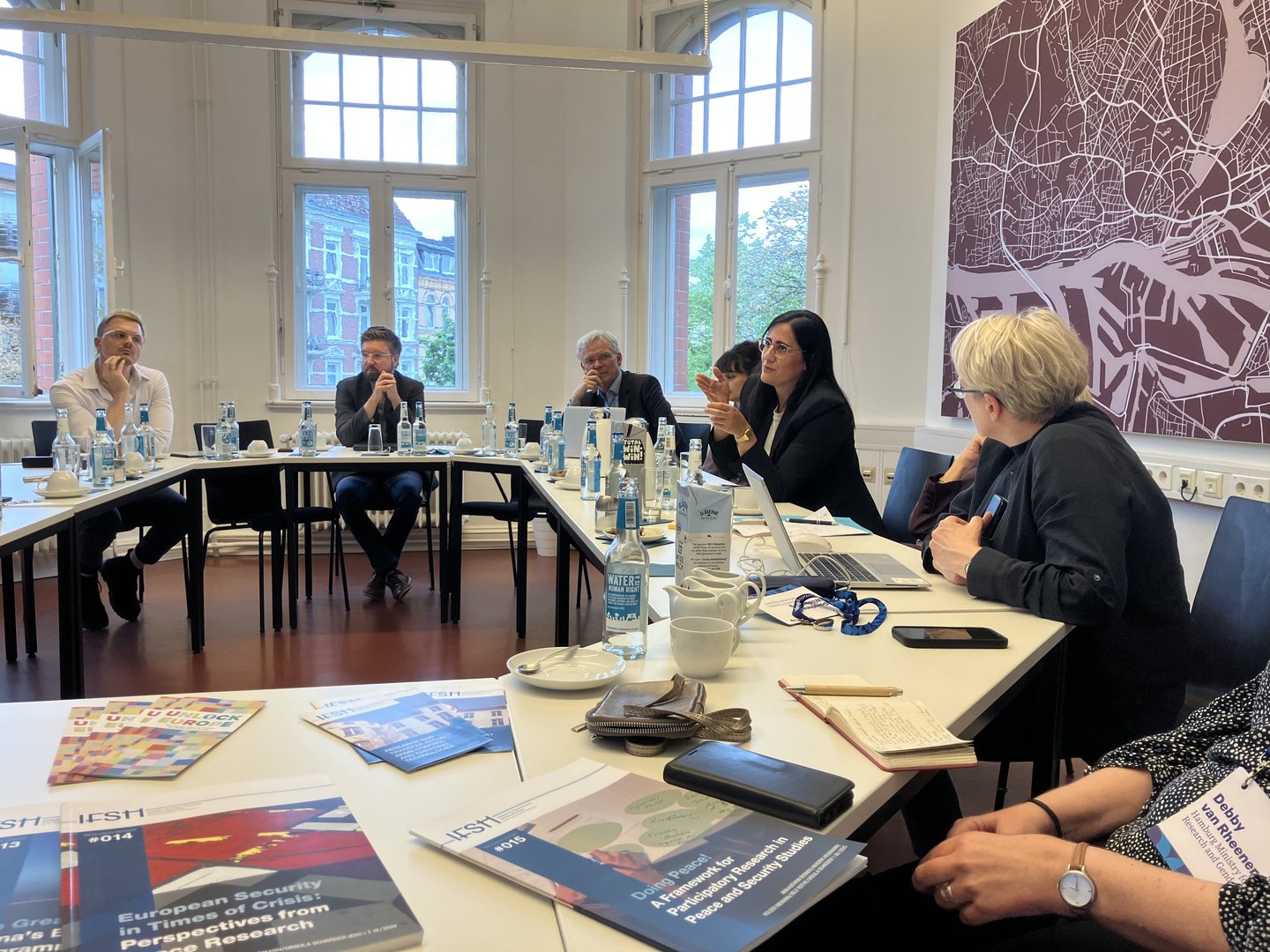
The discussion then shifted to climate research, with Dr Benjamin Hofbauer, also a researcher at IFSH, highlighting the importance of public participation in that field. Only in this way can ethical considerations, including democratic participation and social justice, be incorporated into climate policy. Building on this, Prof. Dr Achim Oberg and his team from the Cluster of Excellence ‘Climate, Climatic Change, and Society’ (CLICCS II) at the University of Hamburg outlined possible climate futures for societies and explored how adaptation and resistance could influence them.

The engaging discussion that followed focused on how security and climate research can produce findings that are not only scientifically sound but also relevant to policymakers, being based on a constructive dialogue with both the political sphere and society. Dr Joanna Drake and Maryam Blumenthal were particularly interested in public dialogue formats that bring researchers and citizens into conversation, such as HADLEY’S Abendsalon. A follow-up meeting in Brussels is being planned to continue the discussion.

Back